Browsing does not equal intent
People look through styles, sizes, colors, and finishes, but the business still needs room type, square footage, budget, and timeline before it can help.
A showroom and catalog concept showing how product browsing, project details, AI summaries, and estimate tracking can work together.
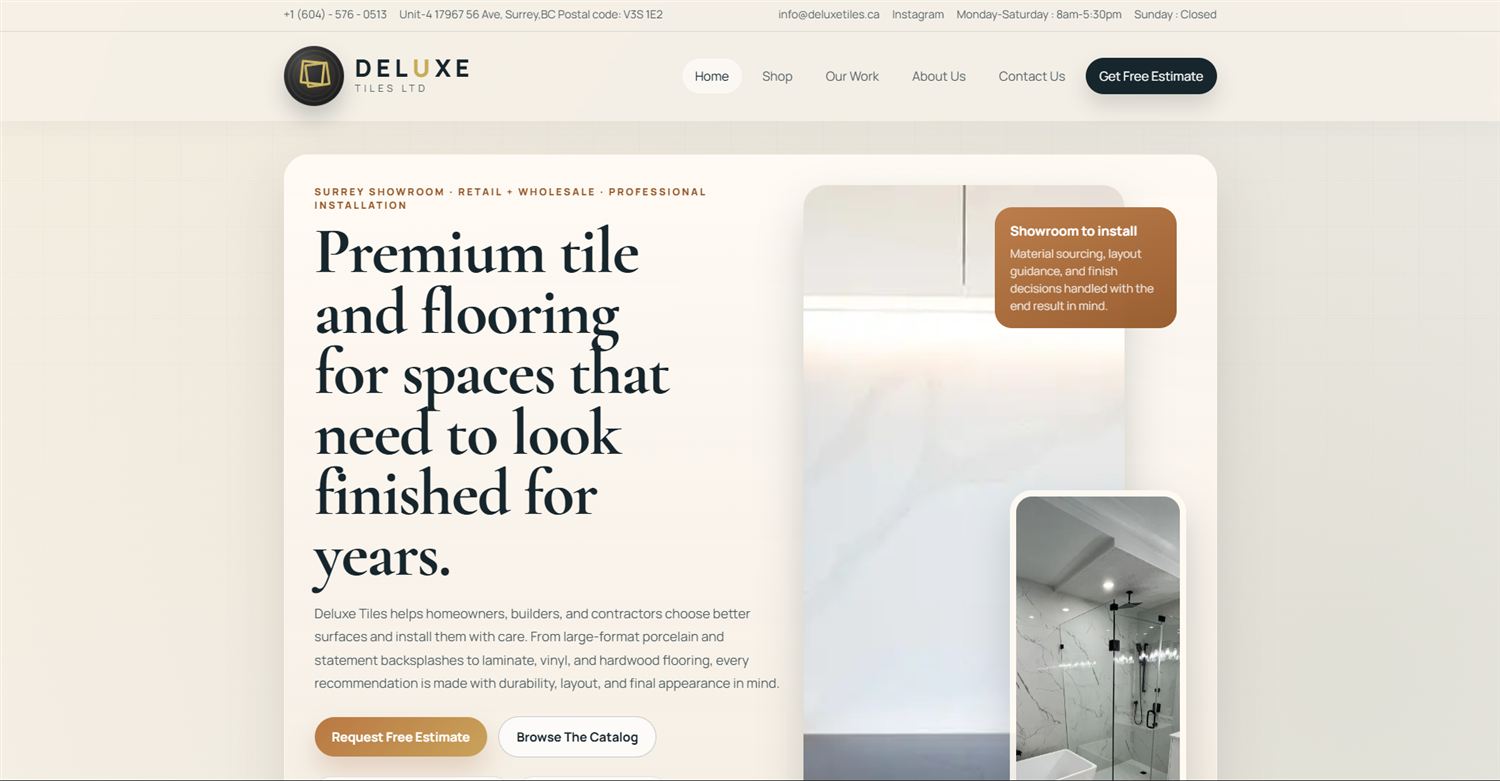
Proof-style breakdown
Tile buyers usually need help narrowing choices. A stronger showroom site should make categories easy to scan, collect room/project details, and help the business prepare a useful quote instead of starting from zero.
People look through styles, sizes, colors, and finishes, but the business still needs room type, square footage, budget, and timeline before it can help.
The concept organizes categories, rooms, styles, sample requests, and project inquiry steps so browsing can turn into an estimate conversation.
AI can summarize the buyer's room, style preferences, quantity estimate, and questions for the sales team.
The request can enter a CRM with product interest, measurements, sample status, visit request, and quote stage.
The system is designed to turn loose inspiration into useful project details, sample requests, showroom visits, and trackable quote follow-up.
Estimate flow
The catalog supports quick scanning across bathroom, kitchen, floor, wall, modern, stone, and luxury-style options.
The site asks for room type, approximate size, preferred look, budget range, timeline, and whether samples or a visit are needed.
The team receives a clear brief instead of a loose message like "I need tiles."
Each request can move through sample requested, showroom visit, estimate sent, follow-up, won, or lost.
Full system breakdown
A showroom site should turn browsing into a useful project conversation, then help the sales team respond with context instead of starting from zero.
People could look at styles, colors, rooms, and finishes, but the team still needed size, budget, timeline, and design direction before helping properly.
The site guides the buyer through room type, preferred style, quantity clues, sample needs, and estimate request details.
AI summarizes room, style, budget, timeline, missing measurements, sample interest, and the best next step for the showroom team.
The team still chooses recommendations, confirms availability, calculates pricing, handles design advice, and owns the final quote.
Product filters, project intake, sample request, AI brief, CRM quote stage, follow-up reminders.
Catalog pages, room filters, project form, sample workflow, AI project summary, quote CRM, weekly pipeline report.
The team gets clearer requests, buyers get faster help, and each project has a visible next step.
What to build
The site should guide product discovery, collect project details, prepare an AI project brief, and track the quote until the buyer gets a next step.
Categories, finishes, rooms, and style filters help buyers narrow the options faster.
Room type, size, budget, timeline, and inspiration help the sales team understand the request.
Sample requests and showroom visits should become trackable steps, not random messages.
The CRM should show project brief, quote stage, follow-up date, and final result.